Penrith Stadium Sewer Relocation Works
SECTORS:
WATER & WASTEWATER
CLIENT:
Infrastructure NSW
REGION:
NSW
STATUS
Complete
COMPLETION DATE:
Infrastructure NSW is delivering the Penrith Stadium Project on behalf of the Office of Sport. As part of the upgrade, ground capacity will be increased to approximately 25,000. Vaughan Infrastructure was engaged by Infrastructure NSW to conduct the realignment of two Sydney Water rising mains and a Sydney Water gravity sewer as part of the major project.
Scope of Works
Realignment of Sewer Mains
RM1 & RM2 DN500 DICL Pipes
Potholing & Investigation Works
Auger & Pour Thrust Block Piles
Strip Topsoil & Prep Ground
Construct RM1 RM2 Dual Trench & lay Gravity Mains CH002-CH114
Construct thrust blocks to RM1 & RM2 DN500 mains
Struct RM1 RM2 Dual Trench & lay Gravity Mains CH114.7-CH212.9
Commissioning & Testing to RM1 & RM2 DN500 mains
Cutover of new mains
Grout fill existing disused mains
Gravity Sewer Main Realignment
Strip Topsoil & Pavement & Extend Site Boundary
Excavate & install DN150 pipework
Construct DN1200 Manhole Chambers
Commissioning & Testing
Connection to existing manhole
Grout fill existing disused mains
Reinstatement to south carpark
Challenges
Site access constraints
With multiple contractors working on site, Vaughan navigated varied site access constraints through effective coordination and clear communication with stakeholders, fostering positive relationships and ensuring the project remained on schedule.
Undisturbed public operations
The Penrith Cricket Club grounds consists of three ovals and is located adjecent to the Penrith Stadium, it was critical that the ground and public space remained operational throughout construction. Vaughan ensured that all works were completed safely with appropriate cordoning measures.
Archaeological Requirements
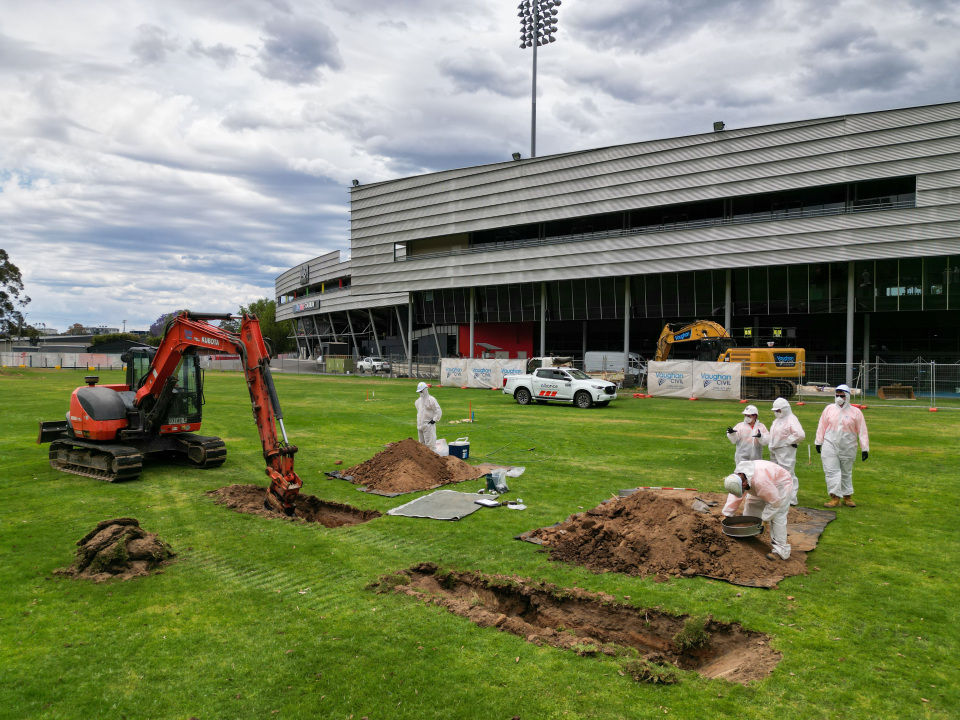
Heritage NSW requested that archaeological trial holes be dug prior to construction to ensure that it was not an area of archaeological significance. An investigation was undertaken in collaboration with our licenced asbestos assessor and specialist heritage consultant, to ensure the area did not present any contamination or heritage significance. Seven test holes were investigated with no notable findings.